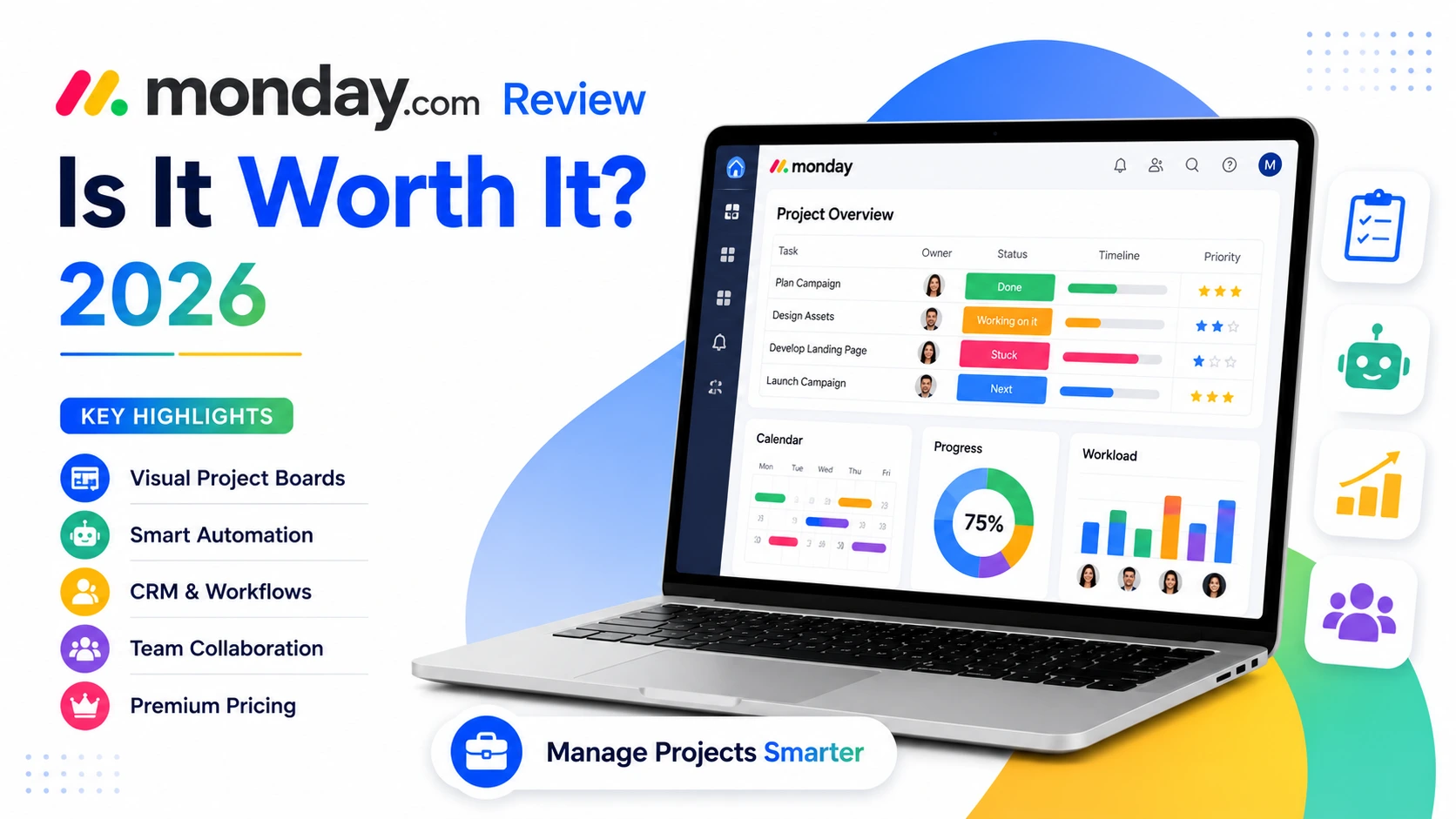
Monday.com built a genuinely distinctive reputation around colorful, highly visual work boards that make project status immediately readable at a glance, differentiating itself from competitors through polish and marketing as much as raw feature depth in its early years. By 2026, Monday.com has expanded well beyond simple task boards into a broader work management platform covering CRM, marketing campaigns, and software development workflows, but it’s also earned a reputation as one of the pricier options in the category, making it fair to ask whether that premium cost still delivers proportionally more value than genuinely strong, often cheaper competitors. This review looks specifically at where Monday.com still earns its cost and where the gap against cheaper rivals has genuinely narrowed.
Visual Board Design and Customization
Monday.com’s board customization remains genuinely industry-leading in visual polish, with color-coded status columns and a wide variety of column types that make complex project data readable at a glance in a way plainer competitors don’t quite match.
🔗 Download on Play Store | monday.com
Automation and Integrations
Monday.com’s automation recipes handle routine tasks like status updates and notifications without custom code, and its integration library covers most major business tools, though building genuinely complex automations still requires real time investment.
Expanding Beyond Project Management
Monday.com’s expansion into dedicated CRM and marketing-specific products lets businesses consolidate more of their software stack into one platform and vendor relationship, appealing to companies wanting fewer separate subscriptions to manage.
Pricing and Where It Falls Short
Monday.com’s per-seat pricing scales up noticeably faster than several competitors as a team grows, and some genuinely useful features remain locked behind higher tiers, making the total cost meaningfully higher than Trello or ClickUp for a comparably sized team.
Teams that specifically value visual polish and find Monday.com’s board aesthetics genuinely motivating for daily use may find that intangible benefit worth the premium, since a tool people actually enjoy opening tends to see better real adoption than a more utilitarian but cheaper alternative nobody wants to check. Businesses considering Monday.com’s expanded CRM or marketing products should directly compare those specific modules against dedicated specialized tools in those categories, since a broader platform doesn’t always match the depth of software built specifically around one function. Budget-conscious teams should seriously compare Monday.com’s per-seat pricing at their actual team size against ClickUp or Asana before committing, since the cost gap can become substantial specifically as a team scales past a handful of members. It’s worth trialing Monday.com directly against your team’s actual current workflow rather than a generic template before deciding the premium is justified for your specific case. It’s also worth asking existing users in your network directly about their real day-to-day experience, since a live demo tends to show off features far more favorably than actual daily use sometimes reveals.
Monday.com’s visual polish and expanding platform ambitions remain genuinely impressive, but the premium pricing means it’s no longer an automatic default the way it might have felt during its earlier growth years. For teams that genuinely value its distinctive visual design and want to consolidate more tools into one platform, Monday.com in 2026 still earns its keep, but budget-conscious teams should compare the real cost difference carefully before assuming the premium is worth paying. A short trial with your actual current workload tends to answer that question far more honestly than any marketing page ever will.