Grammarly popularized the idea of a genuinely helpful, always-on grammar and style checker that works across nearly any app rather than being locked inside a single word processor, and it built a large, loyal user base on the strength of catching mistakes a person would otherwise miss on their own. Years later, general-purpose AI chatbots can also catch and fix grammar mistakes when asked directly, raising a genuine question about whether Grammarly’s specialized, always-on subscription still earns its cost in 2026 or whether that functionality has become effectively free elsewhere. This review looks specifically at whether Grammarly’s specialized, always-on approach still justifies its cost against that increasingly capable general-purpose competition.
Grammar and Style Accuracy
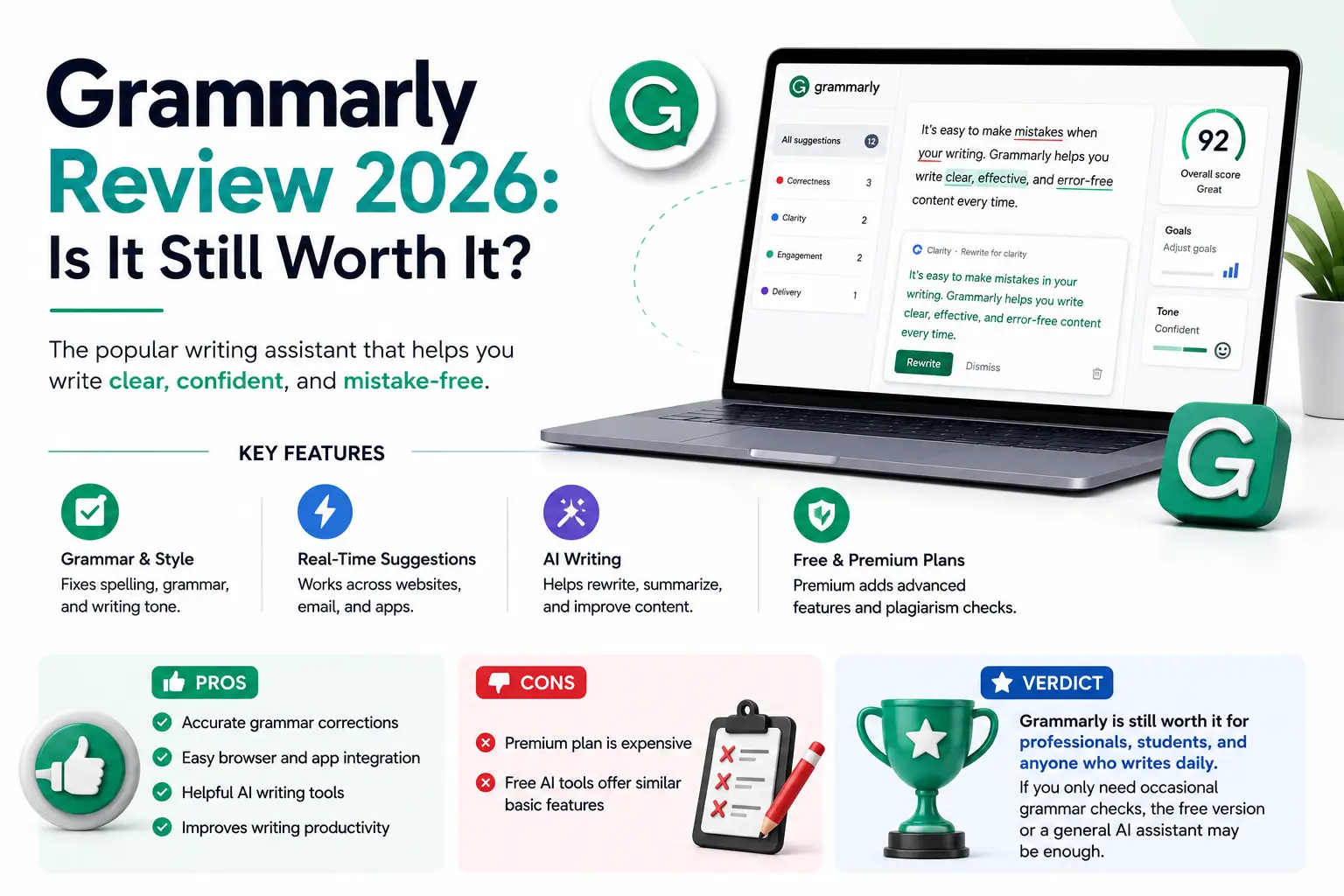
Grammarly’s core grammar and style checking remains genuinely reliable and fast, catching subtle issues like tone mismatches and wordiness that a general-purpose AI assistant might miss unless specifically prompted to look for them.
🔗 Download on Play Store | www.grammarly.com
Always-On Browser and App Integration
Grammarly’s biggest practical advantage remains its integration directly into browsers, email clients, and other apps, catching mistakes in the moment across a person’s actual daily writing rather than requiring a separate copy-paste step into a chatbot.
Grammarly’s Generative AI Features
Grammarly has added its own generative AI writing assistance for drafting and rewriting text, competing more directly with general AI assistants, though these features feel like a genuine secondary addition rather than the app’s primary strength.
Pricing and Where It Falls Short
Grammarly’s free tier covers basic grammar checking well, but premium features like advanced style suggestions and plagiarism detection sit behind a subscription that’s a genuinely harder sell now that general AI assistants offer overlapping capability for less or nothing.
The specific value of Grammarly’s subscription in 2026 comes down to how much a person values seamless, always-on integration across their actual daily writing versus being willing to copy text into a separate AI chat for occasional checking. Professionals who write constantly across many different apps and contexts throughout the day, emails, Slack messages, documents, get genuine ongoing value from Grammarly’s ambient presence that a general AI assistant simply doesn’t replicate without manual copy-pasting each time. Casual users who write less frequently or don’t mind the extra step of pasting text into a chatbot may find the free tier, or a general AI assistant they’re already paying for anyway, sufficiently covers their actual needs without an additional subscription. Students and professionals specifically needing plagiarism detection alongside grammar checking still get dedicated value from Grammarly’s premium tier that isn’t easily replicated elsewhere. It’s also worth noting that Grammarly’s tone detection remains genuinely more specialized than what a general AI assistant offers by default, catching subtle phrasing issues a quick grammar pass alone would miss.
Grammarly’s core value proposition, catching writing mistakes in the exact moment they happen across any app, remains genuinely useful even as general AI assistants have absorbed some of its original novelty. Whether the subscription is worth it in 2026 depends mainly on how much ambient, always-on convenience is worth to your specific daily writing habits rather than any dramatic difference in underlying grammar-checking accuracy. Try a month on the free tier first and genuinely notice how often you reach for a separate tool anyway before committing to the paid upgrade, since that honest habit check reveals more than any feature comparison chart ever could.