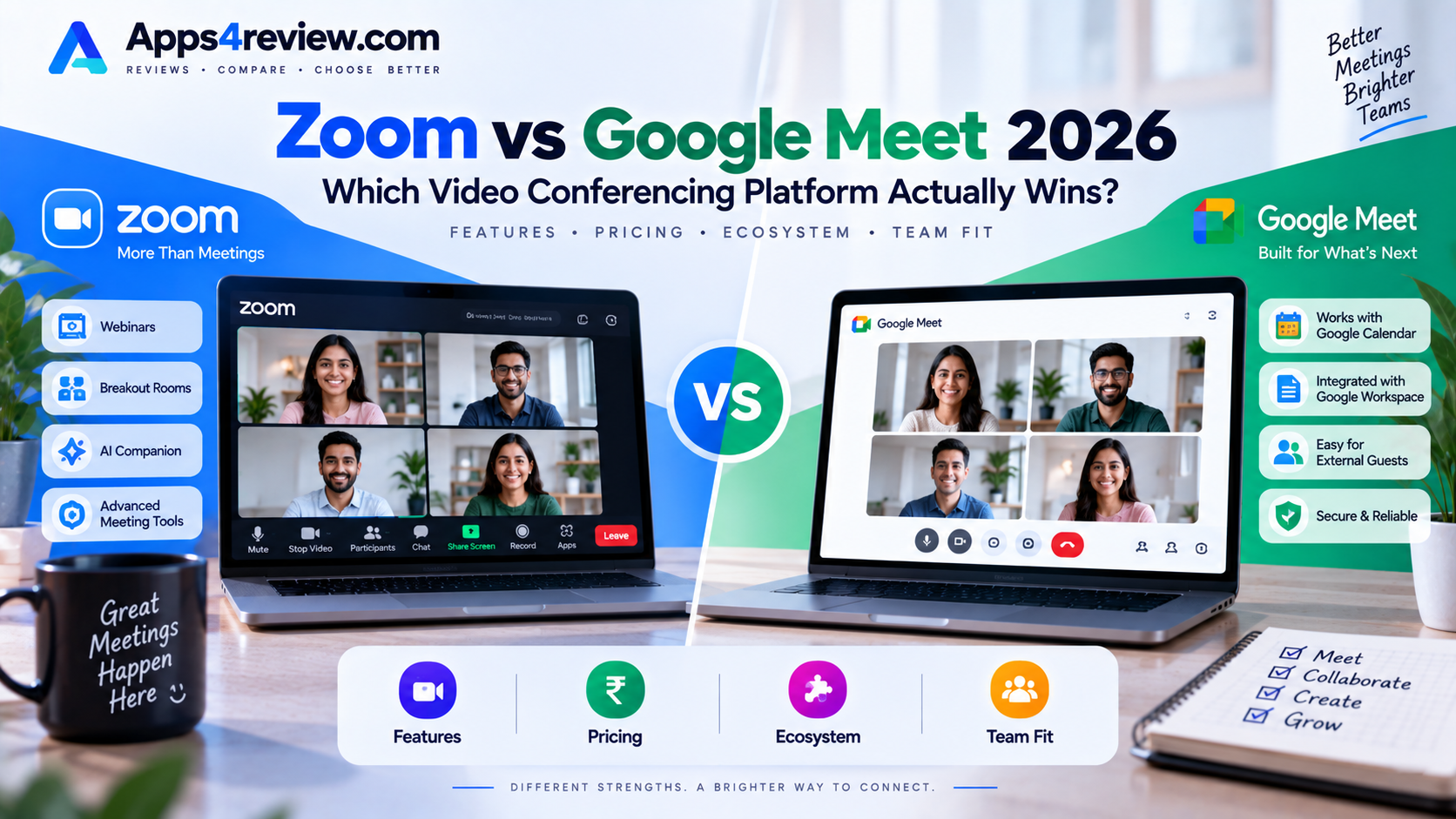
Zoom and Google Meet both remain genuinely mature, widely trusted video conferencing platforms in 2026, but they represent two meaningfully different philosophies: Zoom is a dedicated, purpose-built meeting specialist that has expanded outward into a broader collaboration platform, while Google Meet is deeply woven into the existing Google Workspace ecosystem most organizations already use for email, calendar, and documents. This comparison looks at feature depth, ecosystem integration, and pricing to help teams decide which platform genuinely fits how they already work.
Meeting Features and Polish
Zoom retains a genuine edge in meeting-specific feature depth, with more sophisticated breakout room management, advanced webinar hosting capability, and a considerably more mature virtual background and video filter system that has been refined over years as the platform’s singular core focus. Its AI Companion feature generates meeting summaries and can answer questions about what was discussed without needing to rewatch a recording, a genuinely useful capability that has become standard across the category. Google Meet has closed much of this gap in recent years, but Zoom’s feature depth specifically around large-scale webinars and complex breakout configurations remains noticeably ahead for organizations running genuinely large or complex virtual events.
Ecosystem Integration
Google Meet’s clearest advantage is its seamless, native integration directly into Google Calendar and the broader Workspace suite, letting a meeting link appear automatically the moment an event is created without ever needing to open a separate app or add an integration. For organizations already standardized on Google Workspace for email and documents, this tight integration removes real friction that using Zoom alongside Google Calendar would otherwise introduce, even with Zoom’s own calendar integrations working reasonably well. Zoom’s own ecosystem has grown considerably too, extending into Zoom Docs, Zoom Mail, and a broader collaboration suite of its own, but that growth means a genuinely new set of tools to adopt rather than working within a productivity suite an organization is already using daily.
Reliability and Scale
Both platforms have built genuinely solid reputations for reliability at scale, though Zoom’s specific engineering focus on video call quality and connection stability under difficult network conditions has historically given it a slight edge for users on less reliable internet connections. Google Meet’s infrastructure, running on the same backbone that powers Google’s other massive-scale products, handles very large meetings competently, and its browser-based approach, requiring no separate application download for participants, removes a real point of friction for external guests joining a call for the first time. For organizations hosting frequent external-facing meetings with clients or partners who may not want to install a separate app, Google Meet’s browser-first approach offers a genuinely lower-friction experience for that specific use case.
Pricing and Team Fit
Google Meet’s cost structure benefits enormously from being bundled into Google Workspace plans that most organizations already pay for, meaning there’s frequently no additional per-meeting cost at all for teams already subscribed to Workspace for email and productivity tools. Zoom’s standalone pricing requires a dedicated subscription on top of whatever productivity suite an organization already uses, a real additional cost that only makes clear sense when Zoom’s specific feature advantages, large-scale webinars, more advanced breakout room management, genuinely justify paying for a second platform. Organizations not already using Google Workspace, or those with genuinely heavy webinar and large-event hosting needs, will find Zoom’s dedicated feature depth worth the standalone cost, while Workspace-native organizations with more standard meeting needs will find Google Meet’s bundled pricing difficult to beat.
Neither platform has definitively won in 2026; they continue to serve genuinely different organizational contexts rather than competing head-to-head for the exact same buyer. Organizations already standardized on Google Workspace with fairly standard meeting needs will consistently find Google Meet’s bundled pricing and native calendar integration the more frictionless, cost-effective default. Organizations running genuinely large webinars, complex multi-session events, or those not already invested in Google Workspace will generally get more value from Zoom’s deeper meeting-specific feature set, even accounting for the added standalone subscription cost.
Conclusion
Zoom and Google Meet both remain excellent, mature video conferencing platforms in 2026, and the right choice comes down almost entirely to existing ecosystem investment and how demanding a team’s meeting and webinar needs actually are. For Google Workspace-native organizations with standard meeting needs, Google Meet remains the safer, more cost-effective default, while teams running large-scale webinars or not already invested in Google’s ecosystem should give Zoom’s deeper feature set serious consideration despite the added standalone cost.