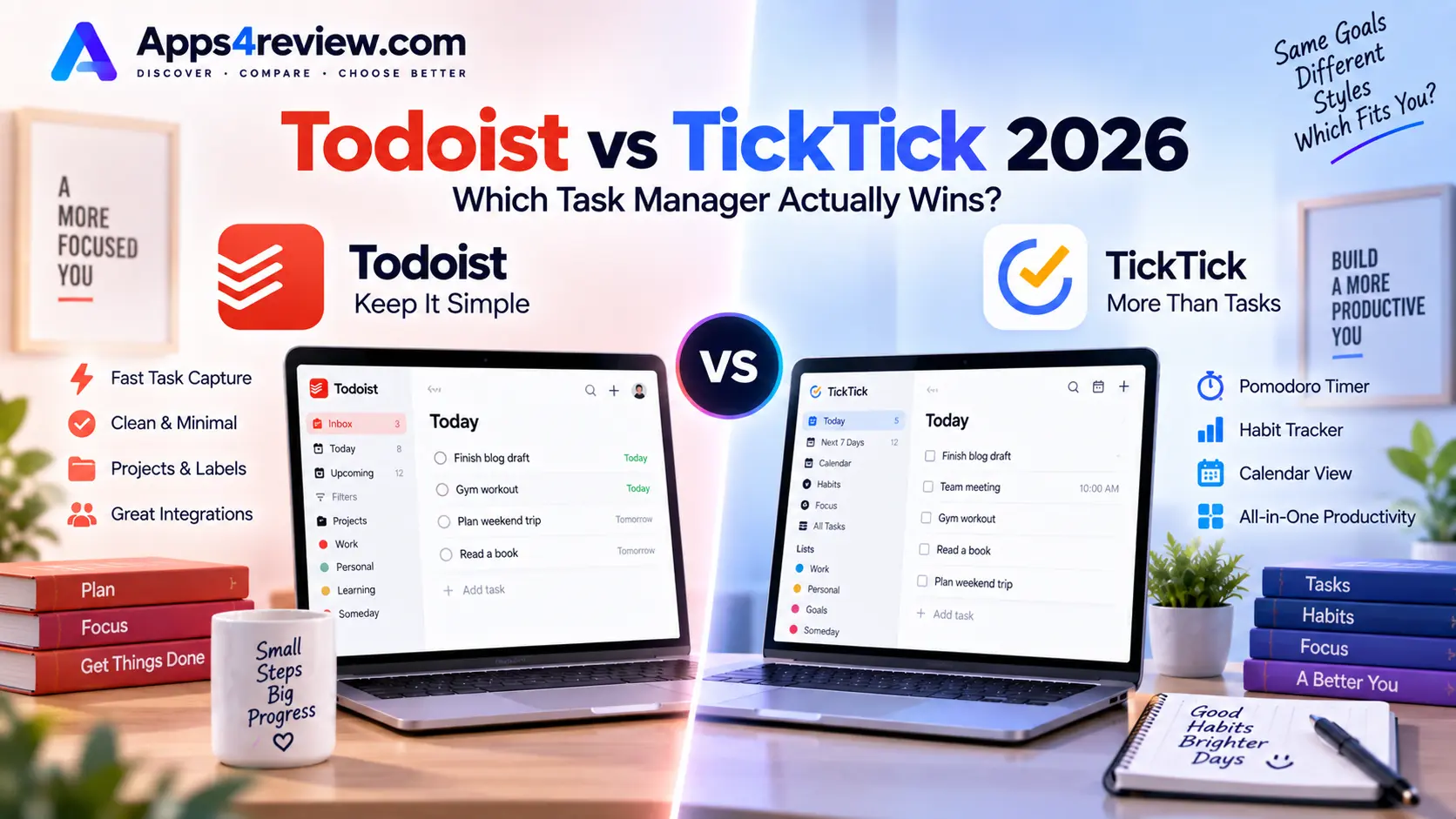
Todoist and TickTick both remain excellent personal task management apps in 2026, but they represent two meaningfully different philosophies about scope: Todoist has stayed deliberately focused on doing task management exceptionally well, while TickTick has grown into a broader productivity suite bundling in a Pomodoro timer, habit tracker, and calendar view alongside its core task list. This comparison looks at simplicity, feature breadth, and pricing to help decide which philosophy genuinely fits how a specific person wants to organize their day.
Core Philosophy and Interface
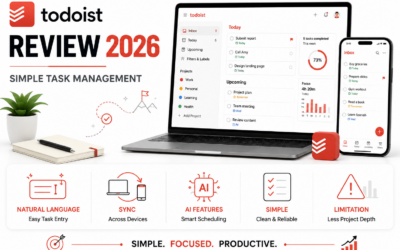
Todoist’s interface remains deliberately clean and minimal, focused purely on capturing and organizing tasks with natural language date parsing, typing due Friday at 3pm automatically sets the correct date and time without needing a separate picker, and a genuinely fast, low-friction task entry flow. TickTick covers similar core task management ground but wraps it inside a considerably busier interface incorporating multiple additional tools, which some users find genuinely convenient for consolidating several apps into one, while others find it adds visual clutter to what should be a simple task list. Users who specifically want a fast, distraction-free task capture experience tend to prefer Todoist’s restraint, while those who want everything productivity-related in one place often prefer TickTick’s broader scope.
Built-In Productivity Tools
TickTick’s clearest structural advantage is its bundled Pomodoro timer and habit tracker, letting users start a focused work session and track recurring habits directly within the same app used for task management, without needing to switch to a separate dedicated tool for either function. Todoist deliberately doesn’t attempt to replicate these features natively, instead relying on third-party integrations for users who want habit tracking or a focus timer alongside their task list. For anyone who specifically wants a single app consolidating tasks, focus sessions, and habit tracking, TickTick’s bundled approach offers genuine convenience that Todoist’s narrower focus doesn’t attempt to match.
Views and Organization
Both apps offer solid project organization with nested subtasks, labels, and filters, but TickTick edges ahead specifically on calendar integration, offering a genuinely capable built-in calendar view that displays tasks alongside scheduled events in a single unified timeline. Todoist’s Kanban-style Board view remains a genuinely well-executed way to visualize task status across a project, and its karma points and productivity trend tracking add a light gamification layer that some users find motivating for maintaining consistency over time. Teams and individuals who want tasks and calendar events visualized together in one place will find TickTick’s integrated calendar view a meaningful advantage over Todoist’s more task-focused views.
Pricing and Team Fit
Todoist’s pricing remains straightforward, with a genuinely usable free tier and a Pro tier unlocking reminders, labels, and larger project limits at a predictable annual cost that has stayed relatively stable over the platform’s history. TickTick’s pricing has historically undercut Todoist for comparable functionality, bundling considerably more features, the timer, habit tracker, calendar view, into its paid tier at a lower price point, which matters for budget-conscious users comparing raw feature-per-dollar value. Users specifically prioritizing Todoist’s more established third-party integration ecosystem and its longer track record with teams may still find the marginally higher price justified, while individuals comparing pure value will often find TickTick the more generous option.
Neither app has definitively won in 2026; they continue to serve genuinely different organizational philosophies rather than competing head-to-head for the exact same user. Anyone who wants a fast, minimal, distraction-free task capture experience and is willing to use separate dedicated tools for habit tracking or focus timing will consistently prefer Todoist’s restraint and established integration ecosystem. Users who want tasks, a Pomodoro timer, habit tracking, and a calendar view consolidated into a single app, and who value getting more bundled functionality for a lower price, will generally find TickTick’s broader scope the better overall value.
Conclusion
Todoist and TickTick both remain excellent, mature personal task management apps in 2026, and the right choice comes down almost entirely to whether a minimal, focused tool or an all-in-one productivity suite better matches how a specific person wants to organize their day. For users who prioritize simplicity and are comfortable pairing separate specialized tools, Todoist remains the safer default, while anyone who wants genuine bundled value across tasks, focus time, and habits should give TickTick’s broader feature set serious consideration.