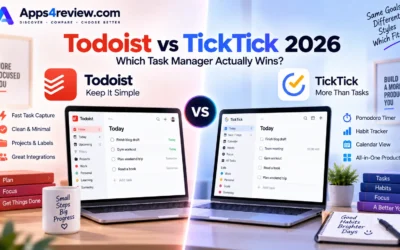
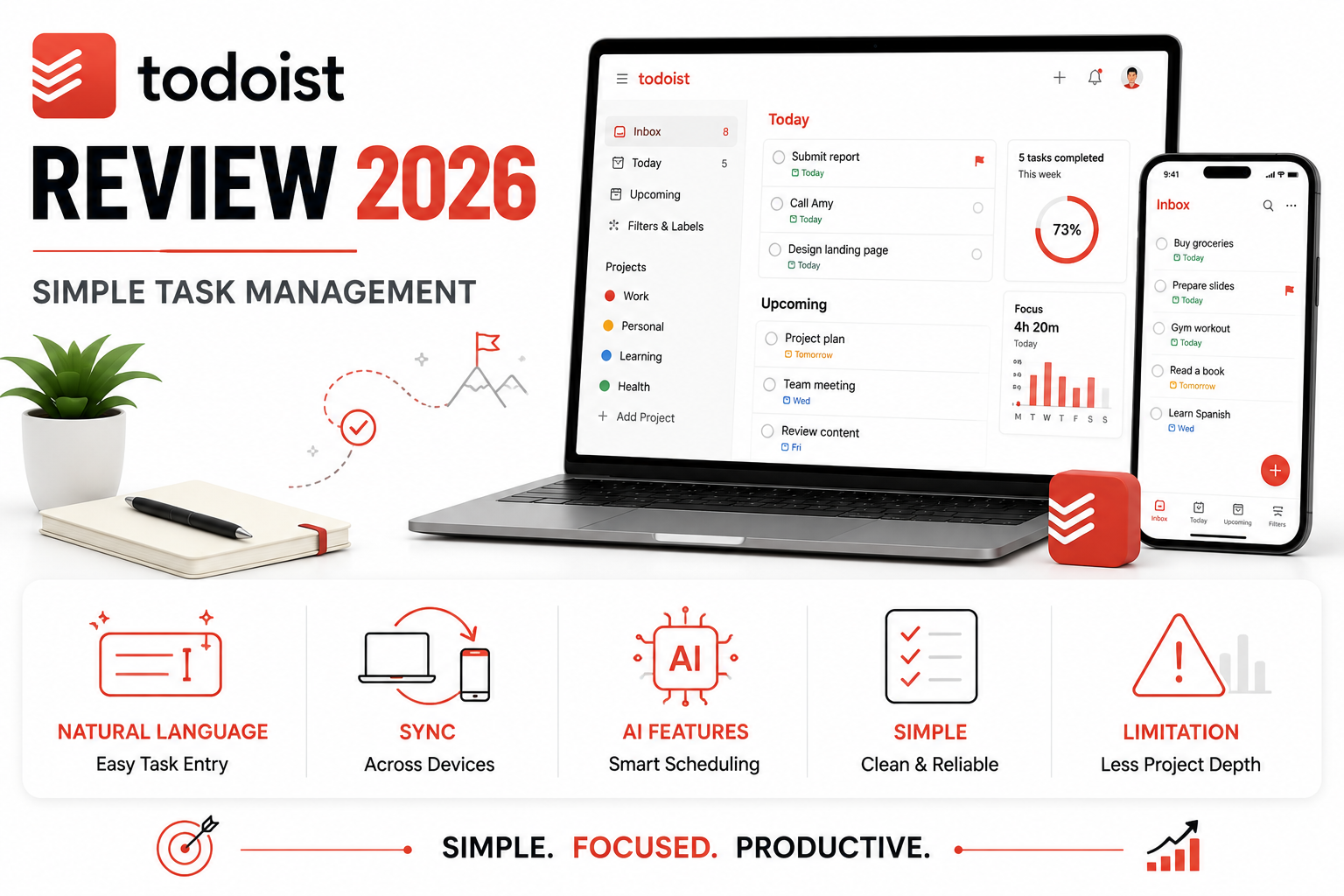
Todoist built a genuinely loyal following on the strength of pure simplicity, a clean task list with natural-language date entry and reliable cross-platform sync, avoiding the feature bloat that many competitors have accumulated over years of add-ons and integrations. That deliberate restraint has always been Todoist’s core appeal, but it’s worth checking in 2026 whether that same simplicity still competes effectively against both heavier all-in-one platforms and equally simple newer rivals that have emerged since Todoist first built its reputation. This review looks at whether that original simplicity has aged well or whether the competitive landscape has genuinely shifted around it.
Natural Language Task Entry
Todoist’s natural language parsing remains genuinely excellent, letting users type something like ‘submit report every Friday at 5pm’ and have it correctly parsed into a recurring task with the right date and time automatically.
🔗 Download on Play Store | todoist.com
Cross-Platform Reliability
Todoist’s sync across devices remains genuinely reliable and fast, a foundational expectation for any task manager that Todoist has consistently delivered on across years of platform updates and changes.
AI-Assisted Features
Todoist has added AI features for suggesting task breakdowns and smart scheduling, though these additions feel like a reasonable, incremental improvement rather than a dramatic differentiator that fundamentally changes the core experience.
Where It Falls Short
Todoist’s simplicity becomes a genuine limitation for users wanting deeper project management features like dependencies or detailed Gantt-style timelines, and its karma point gamification system feels dated compared to more modern motivational approaches competitors use.
Users who specifically value simplicity and reliability over deep feature depth still get genuine ongoing value from Todoist, since its core task management remains genuinely dependable without the configuration overhead heavier tools require. Users managing genuinely complex projects with dependencies and detailed timelines will likely find Todoist’s simplicity working against them, making a heavier tool like Asana or ClickUp a better fit despite the steeper learning curve. Todoist’s natural language entry remains one of its most genuinely differentiating features worth experiencing directly, since competitors have replicated the basic idea but rarely match Todoist’s parsing accuracy in practice. It’s worth trying Todoist’s free tier against your actual daily task list for a couple of weeks before assuming a paid competitor’s extra features are genuinely necessary for your specific needs. It’s also worth checking whether Todoist’s collaboration features genuinely cover a small team’s shared task needs before assuming a heavier dedicated team tool is automatically required. Solo users specifically weighing Todoist against a newer minimalist competitor should also factor in the genuine value of years of platform stability and reliable sync, something a flashier but younger app hasn’t necessarily proven yet over the same stretch of time.
Todoist’s enduring appeal comes from resisting feature creep and staying focused on doing simple task management extremely well, a deliberate restraint that still pays off for users who don’t need deep project management complexity. For individuals and small teams who value that focused simplicity over maximum feature depth, Todoist in 2026 remains a genuinely strong, dependable choice. Sometimes the right tool really is the one that just quietly gets out of the way and lets you get on with the actual work, rather than the one demanding the most attention to configure correctly, especially for anyone who just wants a dependable daily list without becoming a part-time productivity system administrator along the way.