Evernote was genuinely pioneering in popularizing digital note-taking with searchable, tagged notes synced across devices, building a large and loyal user base years before Notion or other modern workspace tools existed at all. Years of intense competition and, at times, genuinely rocky product changes and pricing shifts have since eroded some of that early dominance, raising a fair question about whether Evernote still has a genuine place for new users in 2026 or whether it’s become primarily a legacy tool kept alive mostly by longtime users reluctant to migrate their existing note archives elsewhere. This review looks specifically at where Evernote still genuinely holds up and where it’s fallen behind.
Note Organization and Search
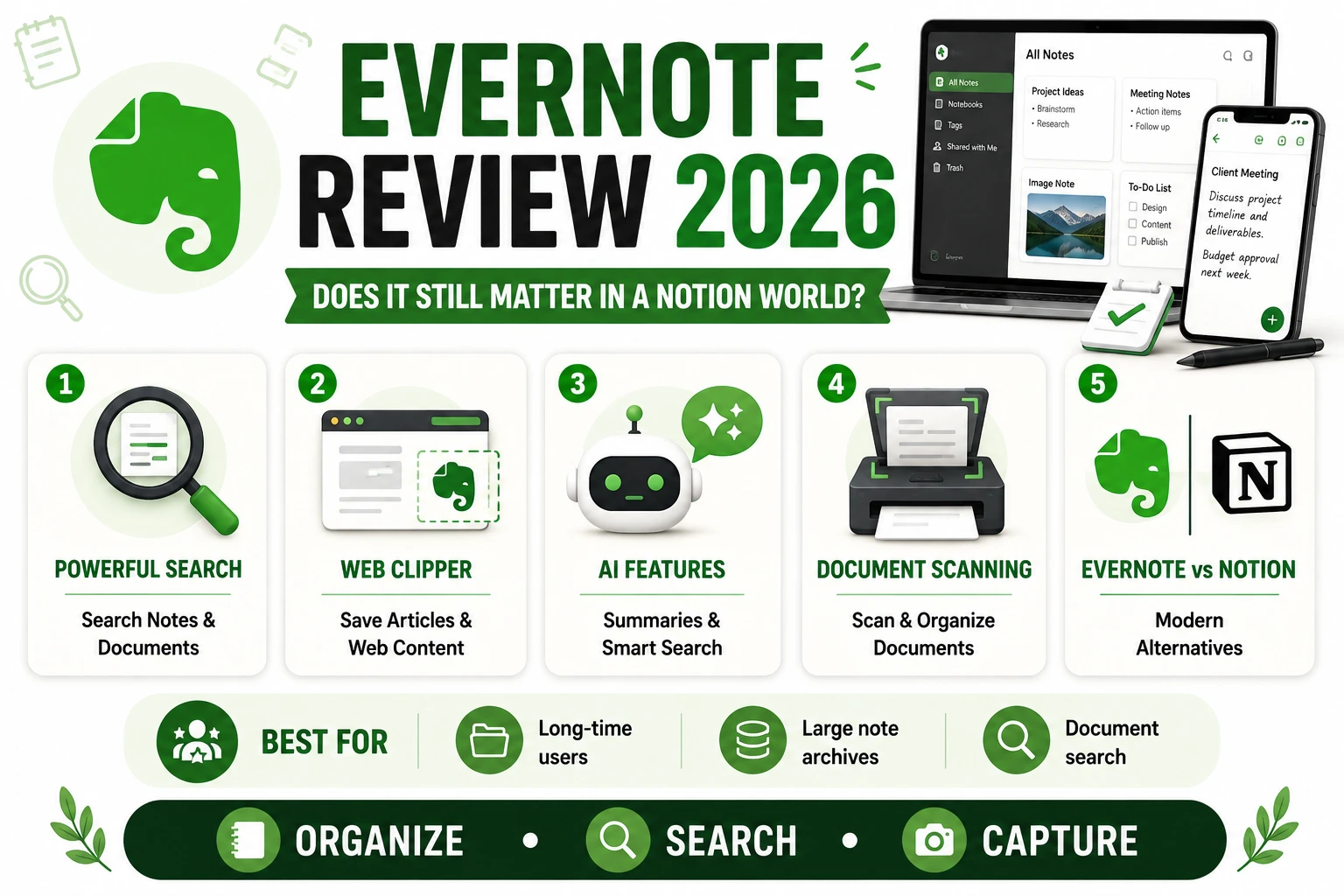
Evernote’s search remains genuinely powerful, including the ability to search text within scanned images and handwritten notes, a capability that still differentiates it from some competitors focused purely on typed text search alone.
🔗 Download on Play Store | evernote.com
Web Clipper and Document Scanning
Evernote’s web clipper and document scanning tools remain genuinely strong, letting users save articles or scan physical documents directly into organized notebooks with reliable text recognition applied automatically.
AI Features
Evernote has added AI-assisted note summarization and search features, though these additions feel like a genuinely necessary catch-up to competitors rather than a differentiating advantage that pulls new users away from other note-taking tools.
Pricing and Where It Falls Short
Evernote’s pricing has grown less competitive against free or cheaper alternatives like Notion or Google Keep, and its interface feels genuinely dated compared to the more flexible, block-based structure that newer note-taking tools have popularized.
Users with a genuinely large existing Evernote archive built up over years still get real value from staying, since migrating thousands of old notes to a new platform carries real friction that often outweighs whatever marginal improvement a competitor might offer. New users without any existing note-taking habit or archive are generally better served starting with a more modern, flexible tool like Notion, given Evernote’s comparatively higher pricing and less contemporary interface design. Evernote’s specific strength in searchable scanned documents and handwriting remains genuinely useful for anyone who scans a lot of physical paperwork, a use case some flashier competitors handle less thoroughly. It’s worth exporting a small sample of existing notes to check compatibility with an alternative tool before committing to a full migration, since formatting doesn’t always transfer cleanly between different note-taking platforms. It’s also worth checking specifically how well a chosen alternative handles scanned handwriting search, since that particular Evernote strength is easy to underestimate until it’s genuinely missing from a new tool.
Evernote’s pioneering role in digital note-taking hasn’t fully translated into continued category leadership, and newer, more flexible tools have genuinely caught up or surpassed it for most new users starting fresh today. For long-time users with a large existing archive, Evernote in 2026 still earns its keep through inertia and genuinely strong document search, but new users without that history are better served looking at more modern alternatives first. Loyalty to a decade of accumulated notes is a genuinely valid reason to stay, but it shouldn’t be mistaken for Evernote still leading the category outright the way it once did years ago when it had few genuine competitors, since the note-taking landscape has genuinely moved on considerably since those early years, with far more flexible options now available to anyone starting completely fresh